
Courage, pioneering spirit, and innovative strength
On September 25, 2025, OptoTech celebrated its 40th anniversary. It was the starting signal for a year of celebrations in which the company looks back with pride and forward with optimism. We spoke with company founder Roland Mandler and the two managing directors, Dr. Stefan Seifried and Jens Schäfer.
Getting these three busy gentlemen together in one place at one time is no easy task. The two managing directors, Dr. Stefan Seifried and Jens Schäfer, commute between Wettenberg and Heuchelheim or travel around the globe. Company founder Roland Mandler is still active in and for the industrial region.
W3+: Mr. Mandler, when you think back to the early days of OptoTech, can you briefly describe how it all came about and what motivated you to start your own company 40 years ago?
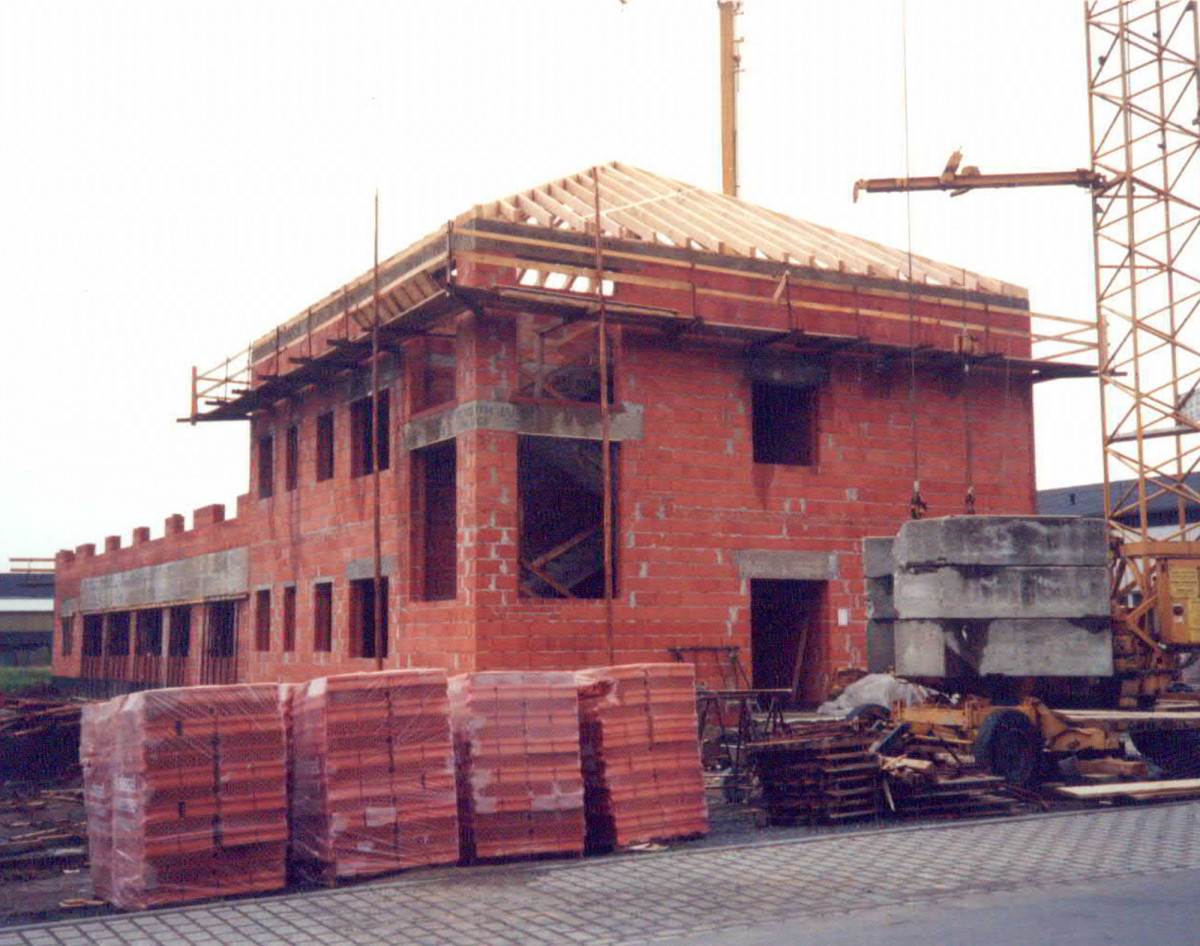
Roland Mandler: I remember it as if it were yesterday. It actually started in a garage. I owe the skills I have to a great education, my studies at the University of Applied Sciences Mittelhessen (THM) in Giessen, and my work as a development engineer at the Loh company. So, I actually had a good and secure job. Starting my own business was quite a risk. At the time, I never imagined it would turn out to be such a success story. In fact, over the past 40 years, we have been able to double our turnover almost every five years! But I also had a very good team of outstanding employees from the very beginning who actively supported me as a source of ideas. My wife once told me that if I had more than 20 employees, she would divorce me. Fortunately, we are still married today.
W3+: What drove you back then?
Roland Mandler: It was a healthy mix of pioneering spirit and a desire for change, coupled with the courage to start something of my own. I spent a lot of time at Zeiss, Leica, and Wild Heerbrugg for my employer, working on advancing optical machines in terms of procedures and processes for the benefit of customers. Internally, I often had to listen to the argument: “We’ve already tried all that, it doesn’t work anyway.” Being fairly persistent and convinced of the idea, I continued to pursue the so-called SynchroSpeed technology in order to bring the process to industry. I succeeded in doing so – in the field of microoptics and endoscopy, where a great deal of manual work was still required in production at that time. On this basis, we developed the first OptoTech optical machines, which were very well received by customers.
W3+: Which technical or technological innovations were and are particularly important for OptoTech?
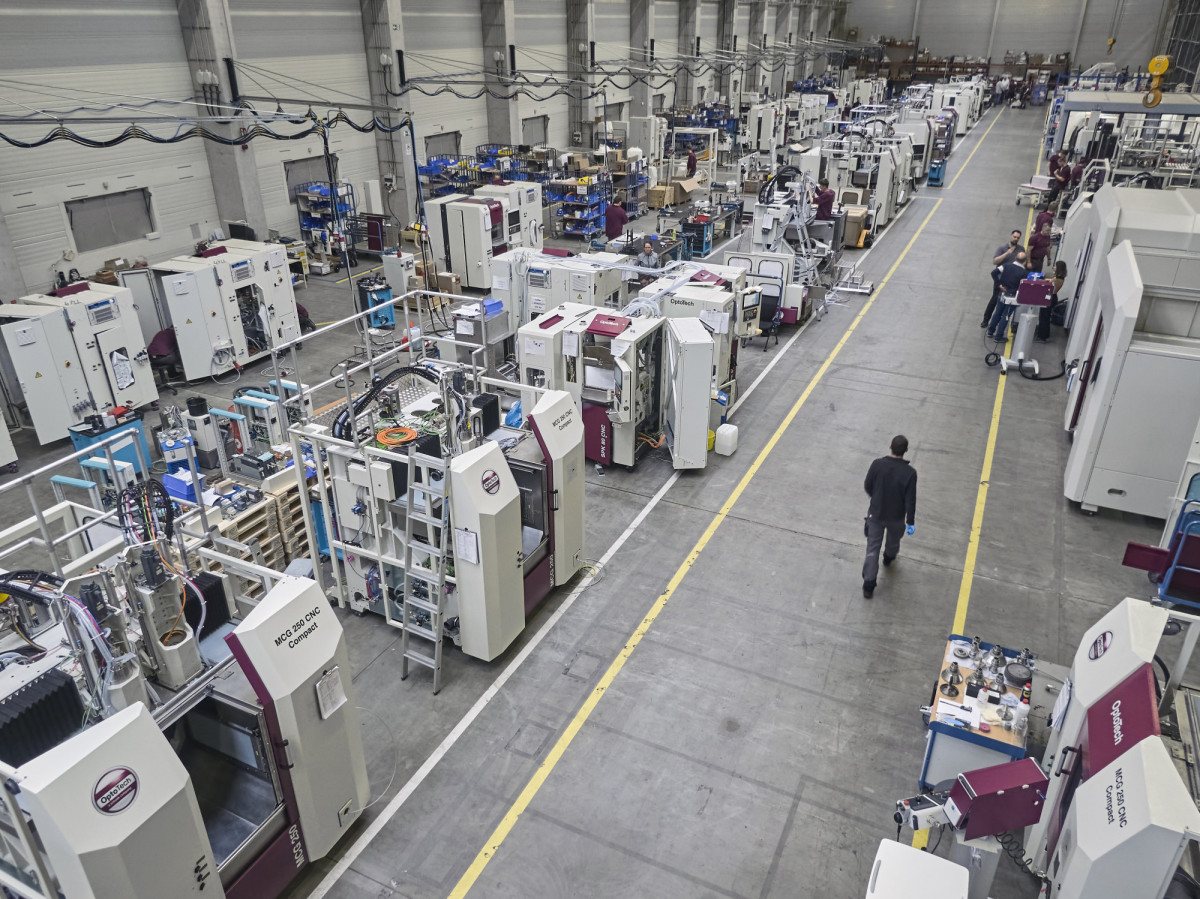
Roland Mandler: In addition to SynchroSpeed polishing with oscillation, we introduced the first CNC-controlled grinding, polishing, and centering machines in the early 1990s. I would also count OptoTech Correction Technology (OCT), the company’s first patent, which enabled the dressing of polishing tools directly in the polishing machine, among the milestones. In 1999, we entered the ophthalmic market, which opened up completely new markets for us. Above all, the development of ultra-precision grinding machines has greatly enhanced our reputation – culminating in 2012 with the UPG 2000 CNC (2012), which we developed for astronomical optics up to 2,000 mm in diameter. Weighing over 80 tons, it remains the largest and heaviest optical processing machine in the world to this day.
Looking back, two fundamental aspects seem more important to me, which OptoTech took to heart as consistently as it did with foresight: Firstly, we never viewed technologies, procedures, and process steps – such as grinding, polishing, or measuring – in isolation, but always as part of a system. For this reason, we did not think in terms of individual machines, but always in terms of lines that build on each other, connect or combine process steps. Secondly, we followed trends at an early stage for which there was no demand at the time of their development; this enabled us to stay one decisive step ahead of the competition time and again.
Stefan Seifried: I think these are aspects that still distinguish us and make us strong today. Even before I joined OptoTech almost exactly three years ago, I was involved in the optical, optoelectronic, and coating industries. Born in Wetterau, I started working as a process engineer in lithography in the hard disk division at IBM in Mainz after completing my engineering studies, acquired my first patents, and worked in mechanical engineering and sales for many years. I am enthusiastic about OptoTech as a company because, as a hidden champion in central Hesse, it has managed to remain at the forefront of technology in the development of optical machines for precision optics and ophthalmics for decades.
Of course, the optical industry has changed significantly in recent years. It is still about mechanical engineering and process technology innovations, but also about the digitalization of machines. Artificial intelligence will also play a role in the future in terms of usability and maintenance. Compared to other industries, the optical industry still has a lot of catching up to do in this area. In addition, globalization has led to increasing differentiation in the market of manufacturers and customers. This means that we do not produce for a consistent global market, but must always keep country-specific requirements in mind: What is possible where? Which technology can we place where? And how can we successfully maintain and expand our competitive position with our innovative products?
W3+: Mr. Schäfer, you have been responsible for administration and finance as managing director of a medium-sized company that very quickly became a successful global player.
Jens Schäfer: I spent 20 years at Weiss Technik GmbH, a Schunk Group company. When Roland Mandler sold 50 percent of Schunk in 2018, I joined OptoTech and worked closely with him for five years as commercial managing director. Mr. Seifert and I now serve as co-CEOs.
To answer your question: Global growth has always been the basis for OptoTech’s growth. The fact that the company has been able to establish itself so successfully in the global market over the past forty years is certainly one of the key factors in its success. At peak times, the export ratio was 90 percent. Germany remains the technological market leader in the field of optical technologies and is strongly export-oriented. But it is also clear that “Made in Germany” is no longer a sure-fire success. This makes it all the more important to drive forward and protect innovation. That is in our hands. The situation is different when you look at the current global developments: we not only have to deal with changing market conditions, but also with far-reaching geopolitical shifts and protectionist efforts by some nations, which we as a globally active company can only influence to a limited extent.
W3+: Does that mean that 40 years of OptoTech are a great success story – but one cannot rest on one’s laurels?
Stefan Seifried: That’s right. Mr. Mandler has already mentioned that we have managed to stay one decisive step ahead of the competition in terms of technology for a long time. And that will remain our goal in the future. We maintain our expertise and knowledge in developing innovative systems at our headquarters in Wettenberg. At the same time, we need to make even better use of our other locations internationally, establishing and expanding alliances with innovative partners in order to incorporate expertise from relevant specialist areas. Just think of topics such as AI and machine networking, the integration of laser technologies, or other high-tech, disruptive processing methods for optically relevant materials of the future. The key here is to maintain the speed of innovation of a medium-sized company while at the same time leveraging the size of the Schunk Group for scaling.

»For a long time, we have managed to stay one decisive step ahead of the competition in terms of technology. And that will remain our goal in the future.«
Dr. Stefan Seifried
W3+: How does OptoTech benefit from such alliances or collaborations within the Schunk Group?
Jens Schäfer: The Schunk Group stands for the highest level of engineering expertise in the field of high-tech materials such as carbon, ceramics, quartz, and sintered metal, as well as in mechanical and plant engineering. The fact that OptoTech, with its unique expertise, greatly enriches the technology group’s portfolio was the deciding factor in joining the Wettenberg-based company and, five years later, taking it over completely. There is a lot of potential for synergy in combining and integrating technologies.
W3+: Was this also the ideal constellation for you to arrange your company succession?
Roland Mandler: Absolutely. It wasn’t a snap decision, but rather a well-considered one that was also based on historical reasons. I live in Heuchelheim, where my father used to work at Schunk. I had always heard of Schunk, but for a long time I didn’t really understand what they stand for. It was only when I started thinking about the future of my company that I took a closer look at the Schunk Group. And I quickly realized that this could be my ideal partner. The prospect of bringing together processes, products, and technologies to develop complex systems within the technology group played a decisive role in this decision.
Jens Schäfer: The synergy effects and market potential that this opens up for OptoTech relate not only to the collaborative development of new systems, but also to cooperation within the Schunk Group’s global network of locations in order to manufacture specific solutions for the respective markets. This is particularly interesting for peripheral modules and products that do not relate to the core competence.
W3+: Will the headquarters in Wettenberg remain the hub for OptoTech?
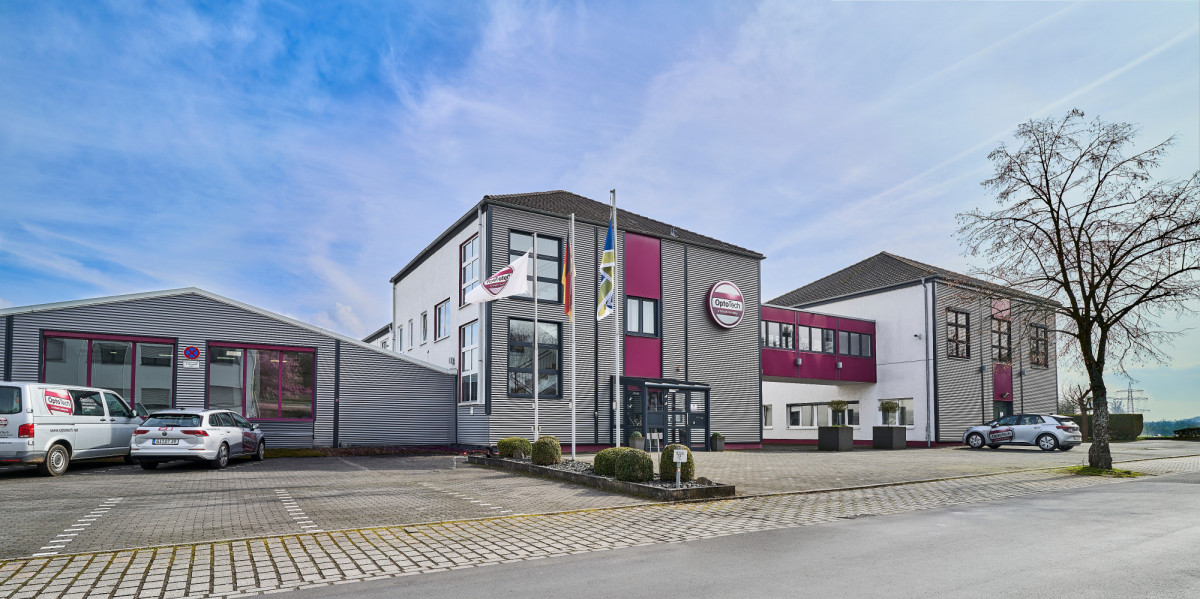
Stefan Seifried: Absolutely. We have an exceptionally high concentration of optical expertise in the region. This benefits us as an employer, but also as a manufacturer, because many customers and business partners are based here. It is extremely important for us to cultivate and preserve high-tech and application-specific development here at our headquarters and in the region. Our core competence and expertise are our greatest assets. But we also have to actively strive for this and invest heavily: in the labor market as well as in young skilled workers, in onboarding colleagues, in increasing efficiency in the organization as well as in networking in the region. I spoke earlier about creating alliances and partnerships – and I believe this is also relevant for location-specific issues. After all, these issues affect not only us, but also many other companies in the region.
W3+: Are these issues that will continue to preoccupy you in retirement?
Roland Mandler: You could say that. I admit that letting go is not easy for me and my impatient mind is constantly working when it comes to devising ideas for the near and distant future. These include entrepreneurial and technological issues, but of course also the topics that Mr. Seifried mentioned. I am still active in the Wetzlar Network industrial network and, in particular, at THM in the area of training young talent. Because if we are genuinely concerned about the future of our industrial region, then we have to start with young people and their qualifications. I see a considerable need for action here. We must succeed in training qualified people here in the region and keeping them here in the companies. The best way to do this is through joint initiatives, because ultimately this is an issue that concerns everyone. The new EXPLORIKUS Science Center, for example, is one such initiative that inspires young people to pursue careers in the STEM fields.
W3+ If I understand correctly, with the official founding date on September 25, the anniversary year has only just begun for you, right?
Jens Schäfer: That’s right. We want to celebrate for a whole year! The anniversary year is just getting started. We have lots of activities and events planned – for our employees, our customers, and the people in the region.
OptoTech Optikmaschinen
Roland Mandler founded OptoTech Optikmaschinen GmbH in 1985. Since then, the company has developed from a pioneer in precision optics and ophthalmics into a leading global supplier to the optical industry. OptoTech is headquartered in Wettenberg and employs over 550 people at 12 locations in six countries. Supported by the strength and long-term vision of the Schunk Group, the company remains true to its mission: to shape the future of optics with vision, precision, and passion.